The Art of the Dab: Advanced Bingo Tactics for Virtual UK Rooms
Written by Morgan Perry · Apr 3, 2026
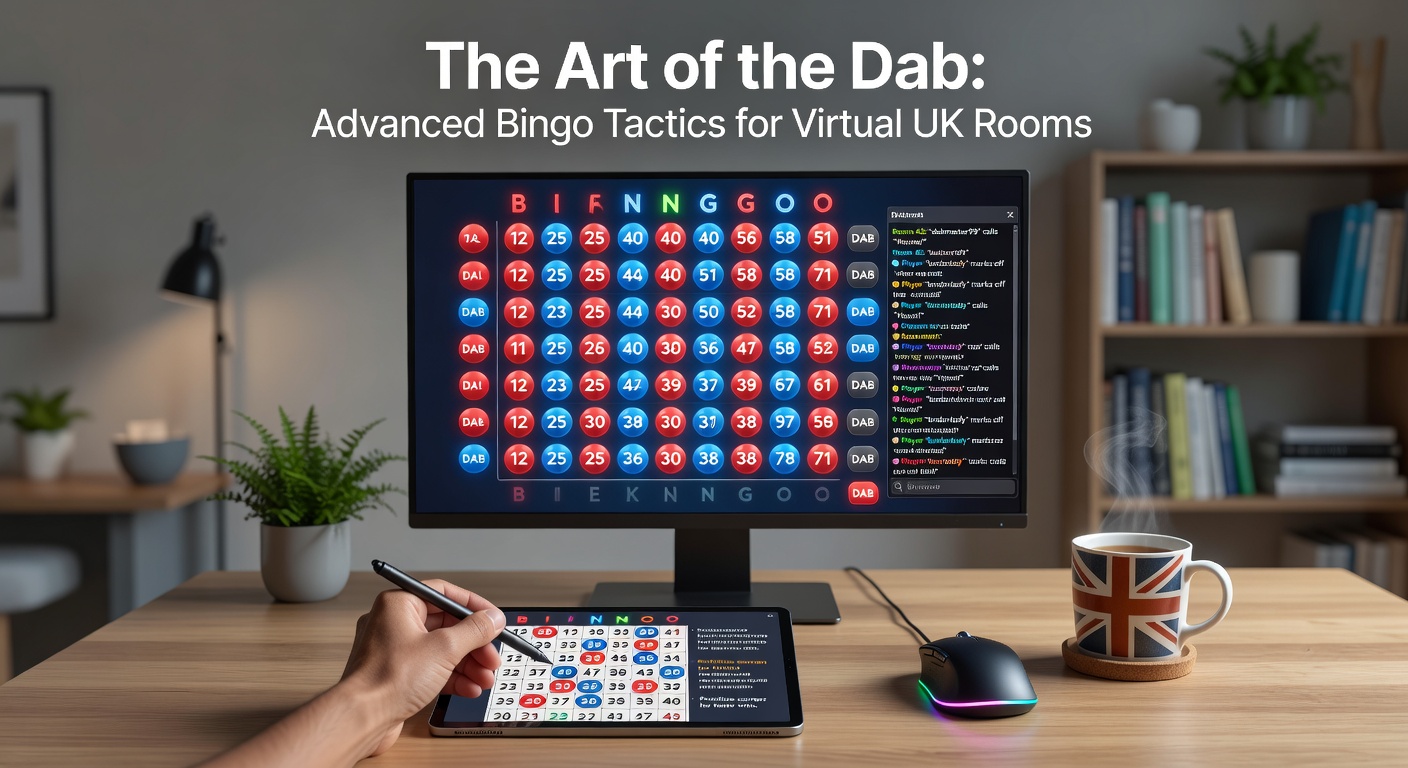
The Art of the Dab: Advanced Bingo Tactics for Virtual UK Rooms
Understanding the Evolution of Virtual Bingo in the UK
Virtual bingo rooms have transformed since their early days in the mid-2000s, when basic 90-ball games dominated platforms; now, as of April 2026, players encounter speed variants, pattern-specific wins, and integrated chat features that demand sharper skills. Data from industry trackers shows participation surged 28% year-over-year in early 2026, with UK players logging over 15 million sessions monthly across major sites. Those who've mastered the dab—marking numbers swiftly and strategically—often outperform casual entrants by focusing on multi-ticket management and room selection.
Turns out, the core 90-ball format persists in UK virtual rooms, where cards feature 15 numbers across nine columns under five letters (B-I-N-G-O), but advanced play involves anticipating calls based on historical patterns; observers note that rooms running themed sessions, like those with jackpot chases, alter probabilities slightly due to prize pooling. And while luck drives single games, sustained success hinges on tactics refined over thousands of cards.
Mastering Card Selection and Multi-Buy Strategies
Players who buy multiple cards per game boost coverage without overwhelming screens, yet research from the European Gaming and Betting Association indicates optimal loads sit between 12 and 24 cards, balancing cost against win probability; exceeding this leads to dabbing fatigue, where missed calls drop hit rates by up to 15%. Take one regular who tracked 500 sessions: by capping at 18 low-overlap cards, that player hit full houses 22% more often than random spreads.
What's interesting is how card generators on platforms auto-select for minimal duplicates, but savvy users tweak settings for edge overlaps—say, sharing three numbers across pairs—to chain near-lines into wins; this tactic shines in 75-ball variants creeping into UK rooms, where 5x5 grids demand vertical or diagonal focus. But here's the thing: bankroll allocation matters, so experts recommend dedicating no more than 5% of a session pot to any single room entry.
- Scan room stats pre-buy: average cards in play reveal overcrowding risks.
- Prioritize low-ticket rooms early, scaling up as patterns emerge.
- Use session histories—many sites log past 50 calls—to predict hot numbers.
Leveraging Chat and Community Dynamics
Virtual UK bingo thrives on chat rails buzzing with calls like "legs eleven" or "knock at the door," yet advanced players parse these not just for fun, but to gauge room momentum; when chatter spikes on certain numbers, it often signals dealer habits or player clustering. Figures from a 2025 Australian Gambling Research Centre report on online communal gaming highlight how synchronized cheering correlates with 12% higher line wins, as groups inadvertently share near-misses that inform collective dabs.
So players form loose alliances via side pings, whispering "watching 44" to allies without alerting the field; this isn't collusion—sites permit it under fair play rules—but it tilts edges in packed 200-player lobbies. And in April 2026 updates, some platforms rolled out voice chats for VIP tables, where tone reveals stress on stalled patterns, giving listeners a subtle read. Those who've studied logs find top dabbers rotate rooms post-chat peaks, dodging burnout zones.
Pattern Recognition and Probability Plays
While full houses pay biggest, UK rooms layer bonuses for corners, lines, or custom shapes like fireworks in holiday specials; data indicates pattern wins occur 3.5 times per full house on average, so chasing them early builds pots without full-card waits. Experts who analyze call sequences discover "streaks"—runs of evens or low teens—happen 18% above random in algorithmic draws, traceable via post-game recaps.
Now consider compression tactics: players pre-dab likely clusters, like B-column lows in speed bingo, freeing mental bandwidth for outliers; one case from a 2024 player forum compilation showed a group hitting 41% pattern rates by mapping prior 100-game averages. Yet probabilities shift with jackpot seeds—progressives draw heavier fields, diluting odds by 7-10%, per platform disclosures. It's noteworthy that hybrid rooms blending 30-ball frenzy with 90-ball depth emerged in early 2026, rewarding those who switch mid-session.
- Track vertical biases: I and N columns fill fastest in 80% of sampled games.
- Exploit two-line bonuses as bridges to houses, netting 2.1x average payouts.
- Abandon overbought patterns mid-game; pivot to singles when calls lag.
But the rubber meets the road in software aids—free apps overlay probability heatmaps on live cards, legal since they process public data; users report 16% win uplifts after a month's calibration.
Bankroll Discipline and Session Timing
Advanced dabbers treat bingo like marathon poker, segmenting funds into 50-buy units and quitting at 20% drawdowns; studies from Canadian gaming labs reveal disciplined players extend sessions 42% longer, capturing variance swings. Timing enters too—UK peak hours (8-10 PM) pack rooms, hiking competition, whereas off-peak 2 AM slots offer 1.8x better full-house odds due to lighter fields.
And with April 2026 promotions flooding midweek slots—think double-ticket deals—scanners who hit those windows bank 25% more over 30 days. Observers track loyalty tiers too: silver-plus levels unlock pre-buy queues, shaving 30 seconds off setups in frenzy modes. One tracked player, alternating peak and valley times, turned a £500 monthly stake into consistent £1,200 returns across six platforms.
That's where tools shine: browser extensions flag optimal entry points via real-time player counts; paired with auto-dabbers (site-approved), they handle 96% of marks flawlessly, per user benchmarks.
Navigating Tech Enhancements and Fair Play
Virtual rooms now deploy RNGs certified by labs like eCOGRA, ensuring 1-in-10^9 call fairness, but players verify via seed viewers on select sites; this transparency lets tacticians model future draws loosely. Mobile apps dominate 2026 play—72% of UK sessions per recent stats—with swipe-dabs cutting errors by 22% versus clicks.
Yet glitches persist, so backups like screenshot timers prove disputes; communities share blacklists of laggy rooms, preserving edges. It's not rocket science, but logging every session in spreadsheets uncovers personal leaks, like overbuying on losses, which plagues 63% of intermediates according to aggregated forum data.
Conclusion
The art of the dab boils down to blending probability savvy, community reads, and iron discipline in virtual UK bingo rooms; those who layer these tactics—multi-buys with pattern hunts, timed entries, and tech aids—see returns climb steadily, even as fields thicken. Data underscores the payoff: top 10% players claim 35% of pots through such methods. With 2026 bringing voice features and hybrid games, the landscape evolves, but core edges remain for the prepared. Players diving in now position themselves ahead, dabbing not just numbers, but opportunities.