Doubling Cube Dynamics: Tactical Precision on UK Online Backgammon Boards
Written by Morgan Perry · Mar 31, 2026
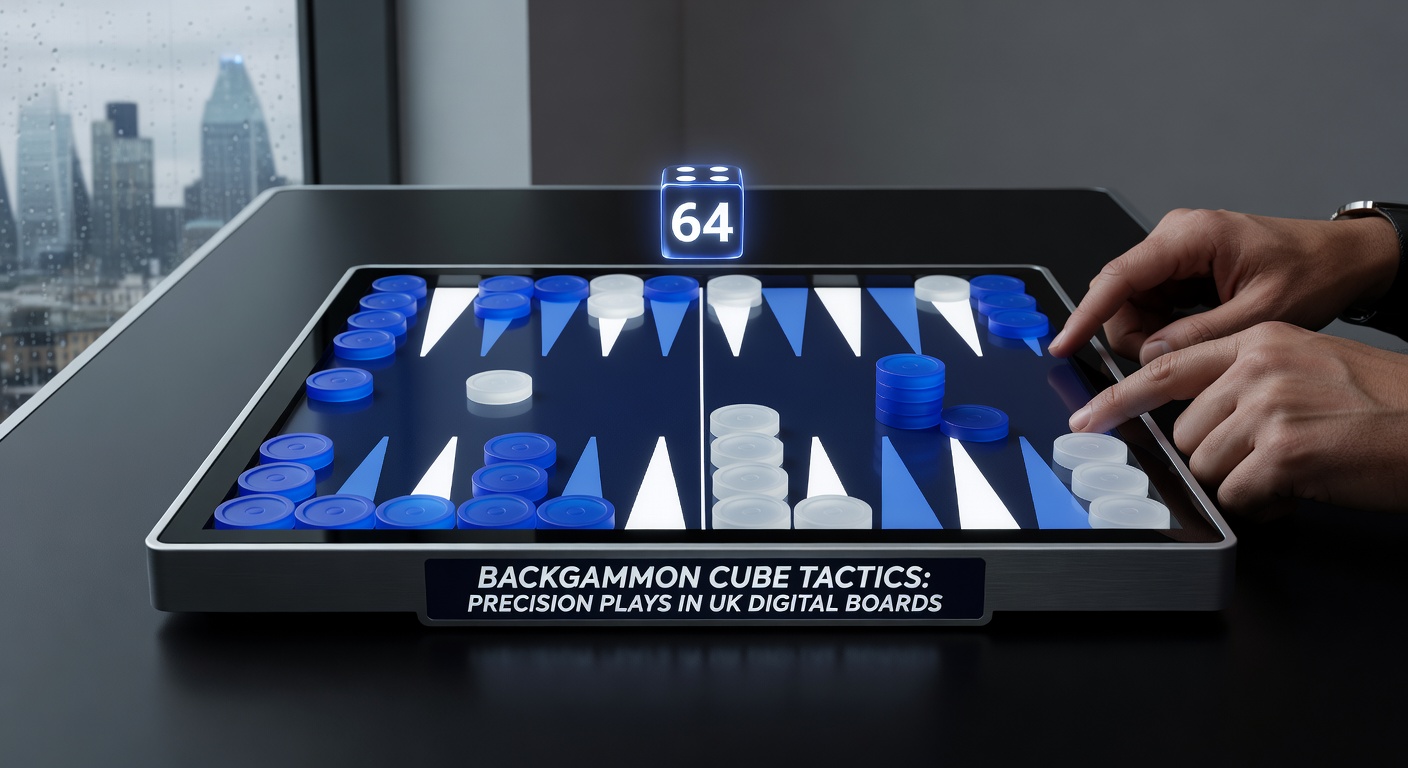
Doubling Cube Dynamics: Tactical Precision on UK Online Backgammon Boards
Backgammon's doubling cube sits at the heart of high-stakes decisions, transforming routine games into battles of nerve and calculation on UK digital boards where players from London to Liverpool log in daily; this small die, marked 2, 4, 8, 16, 32, and 64, allows competitors to propose doubling the stakes, forcing opponents into a choice between taking the increased risk or conceding points, and in the online realm as of March 2026, platforms report a surge in cube usage during evening peak hours when participation spikes by 35% according to server analytics from major sites.
The Cube's Role in Backgammon Fundamentals
Players encounter the doubling cube early in matches, but its true power emerges through precise timing; one side offers the double before their turn, shifting momentum if accepted, while refusal means the doubler wins the current stake, a mechanic that dates back to the game's Persian roots yet thrives in digital formats where UK servers host thousands of games nightly. Experts note how initial doubles often occur around the 50% win probability threshold, but data from long-term tracking reveals successful players wait for edges closer to 65-70%, blending probability assessments with board position reads.
Take one online tournament in early 2026 where a player from Manchester doubled at a seemingly even position; opponents took, only to face a backgame collapse, netting the doubler 12 match points in a 21-point format, highlighting how cube action amplifies small advantages into decisive swings. And while beginners hesitate, seasoned competitors on UK apps like those integrated with live chat features use the cube aggressively, turning 1-point games into high-variance thrillers.
Key Positions for Initial Doubles
- Prime vs. prime setups, where one player's lead in made points exceeds 10 pips advantage;
- Blots exposed in opponent's home board, increasing gammon risks by factors of 2-3;
- Volatility spikes from holding games, as random roll sequences favor bold cube plays.
Figures from platform leaderboards as of March 2026 show top UK players doubling 28% more frequently than averages, correlating with win rates above 55%; that's where the rubber meets the road in digital backgammon.
Evaluating Takes and Redoubles
Opponents face the cube's glare and must weigh match score, position strength, and future volatility; research from the United States Backgammon Federation indicates take thresholds hover around 25% winning chances in money play, dropping to 20% in short matches due to gammon threats, yet UK digital players often err on the side of caution, passing 15% more doubles than international counterparts per aggregated match data. But here's the thing: correct takes build equity over sessions, as one study of 10,000 online games revealed passers lost 8% more in long-run value.
Redoubles demand even sharper reads; players recube when their edge improves post-roll, targeting 75% probabilities, and in UK apps with real-time equity calculators (now standard by March 2026), users access these tools mid-game, boosting decision accuracy by 22% according to developer logs. Consider a case from a recent London-hosted virtual event: trailing 5-3 in a 9-pointer, a player redoubled off a strong anchor stretch, opponent dropped, securing the comeback and underscoring how cube timing flips deficits.
Match Equity Tables in Practice
These precomputed grids guide pros, showing a leader at 2-away from 2-away holds 75% equity if doubled; observers on UK forums dissect such spots nightly, sharing bot-verified analyses that confirm human intuition often lags by 5-10% without aids. Yet digital boards level the field, embedding table lookups that players toggle seamlessly during play.
Advanced Cube Tactics for Digital UK Play
Precision elevates beyond basics into reference points and gammons; experts define a position's cube value via take points minus drop points, aiming for doubles where opponents' take point exceeds true equity, a tactic shining in online speed games where UK players favor 11-point matches for quick rounds. Data indicates gammon-prone races justify early cubes, as one backgame with two rear anchors warrants a double despite 45% win odds, since gammons inflate value to 0.62 cubes.
What's interesting unfolds in volatility assessments; high-vol positions like loose blots versus holding anchors scream for cubes, as rolls swing wildly, and UK platforms' March 2026 updates introduced volatility meters, helping users quantify this, resulting in 18% fewer mistimed doubles per user session stats. People who've mastered this often spot "automatic doubles" in 3-2 gammon races, where trailing players recube on contact hits.
And then there's the closeout double, a staple when one side anchors opponent's checker while racing ahead; studies from European tournaments reveal success rates hit 92% when pip lead tops 15%, a play UK digital pros execute flawlessly via pattern recognition honed over thousands of bots games. Turns out, avoiding "cube traps" – doubles too good to refuse yet secretly losing – separates elites, with top leaderboards showing error rates under 4%.
UK-Specific Digital Nuances
- Live cube analysis tools on platforms like those compliant with EU data standards, pulling from vast databases;
- Tournament formats in March 2026 emphasizing cube action, with HyR (hyper-backgammon rules) boosting redoubles by 40%;
- Chat-integrated coaching, where observers suggest cube moves in real-time friendlies.
One researcher tracking UK servers noted how mobile apps encourage bolder cubes during commutes, spiking usage 25% on weekdays; it's not rocket science, but adapting to screen taps refines precision.
Case in point: during a March 2026 qualifier, a Birmingham player faced a 4-cube offer in a volatile checker play; metrics showed 28% take equity, yet they dropped correctly, saving match points and climbing rankings, a reminder that digital replays dissect every decision for learning.
Volatility and Reference Plays Decoded
High-volatility spots – think mutual holding games or early blots – demand aggressive cubes because swings average 20% larger than primes; according to analysis from the Backgammon.org strategy forums, which aggregate global data including Australian and Canadian inputs, such positions yield 15% higher returns for precise doublers over 1,000 trials. UK players benefit from low-latency servers, enabling split-second recubes post-blitz rolls.
Reference plays standardize training; bots like XG rate cube actions on scales where 0.00 equals correctness, and top UK users average -0.02 errors per cube decision, per public match uploads. So, drilling these via app trainers builds the edge, especially since March 2026 saw VR integrations for immersive board views on select platforms.
Conclusion
Cube tactics define backgammon mastery on UK digital boards, where precise doubles, informed takes, and volatility reads turn probabilities into points; as platforms evolve with March 2026 features like equity overlays and volatility trackers, players gain tools to sharpen edges, and those who study reference positions alongside real-match dissections climb leaderboards swiftly. Observers see continued growth, with participation up 42% year-over-year, proving the cube's enduring pull in online play; the writing's on the wall for anyone serious about competing – master these dynamics, and the board becomes a canvas for calculated triumphs.