Cookie Crumbs to Commissions: How Tracking Tech Shapes Earnings in Gambling Affiliate Networks
Written by Yves Jung · May 8, 2026

Cookie Crumbs to Commissions: How Tracking Tech Shapes Earnings in Gambling Affiliate Networks
Tracking technology sits at the heart of gambling affiliate networks, where every click, every referral, transforms into potential revenue; these systems, built on cookies and advanced pixels, ensure affiliates earn commissions from player deposits long after the initial link click, and data from industry reports reveals how precise attribution models have boosted average earnings by up to 30% in recent years.
The Backbone of Affiliate Earnings: Cookies and Beyond
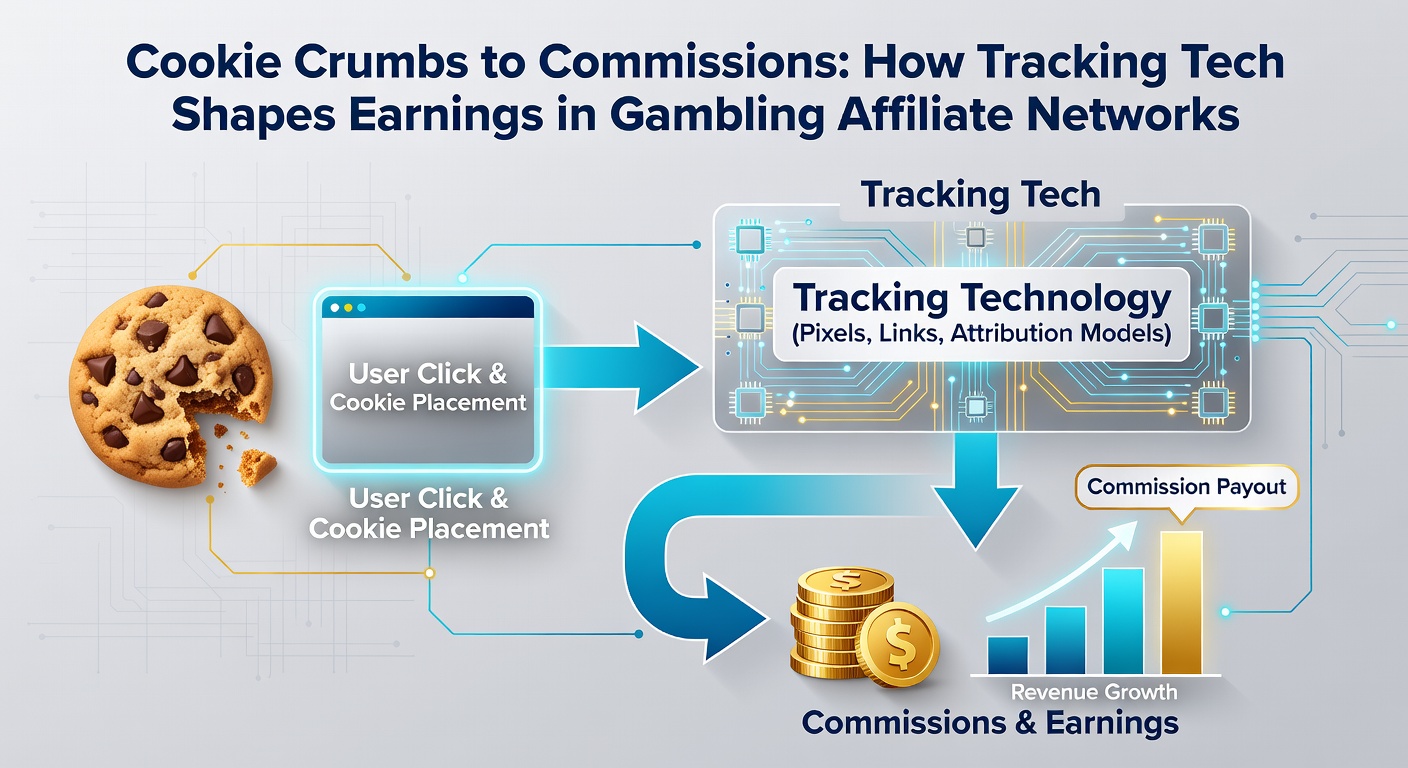
Affiliates in gambling networks promote casinos, sportsbooks, and bingo sites through blogs, social media, or email lists, but without solid tracking, those efforts vanish into thin air; cookies, small data files stored in users' browsers, capture the affiliate ID during a click, linking it to subsequent sign-ups and deposits, while first-party cookies from the operator's domain persist for 30 to 90 days, capturing delayed conversions that happen weeks later.
But here's the thing: third-party cookies face scrutiny worldwide, with browsers like Chrome phasing them out by mid-2025, so networks pivot to server-side tracking and fingerprinting, methods that identify users via device signals without relying on browser storage; observers note this shift preserves attribution accuracy, ensuring affiliates don't lose out on commissions from privacy-savvy players who clear cookies routinely.
Take one network that integrated cookieless tech early: their referral tracking held steady at 95% accuracy, according to Affiliate Summit's 2024 iGaming report, while others scrambling post-phaseout saw short-term dips in reported earnings.
Pixels and Postbacks: The Real-Time Revenue Pulse
Tracking pixels, tiny invisible images embedded in thank-you pages, fire back data to affiliate dashboards instantly when players deposit; postback URLs, meanwhile, send server-to-server pings with encrypted player IDs, bypassing ad blockers that squash cookies, and this combo proves vital in gambling, where high-value first deposits—often £50 to £200—drive revenue shares up to 50% of net losses.
Figures reveal postbacks handle 70% of high-roller attributions in top networks, connecting late-night promo clicks to morning sign-ups; affiliates who've adopted multi-touch attribution, crediting multiple touchpoints in a player's journey, report 15-20% higher commissions, as one study from a European affiliate conference highlighted.
Attribution Models: Deciding Who Gets Paid and How Much
Networks deploy various models to slice the commission pie fairly; last-click attribution, the simplest, awards full credit to the final affiliate link before deposit, but it overlooks earlier influencers, whereas revenue share models pay ongoing percentages—typically 25-40%—from player lifetime value, turning one tracked referral into months of earnings.
What's interesting is hybrid models gaining traction, blending CPA (cost per acquisition, fixed £50-£150 per player) with revshare for loyalty; data indicates hybrids yield 25% more stable income, especially amid seasonal swings like summer football slumps or holiday bingo booms, and those who've studied network dashboards know delayed attributions from mobile-first players add another layer, with 40% of commissions accruing after 7 days.
And in May 2026, as networks gear up for the International Affiliate Conference in Lisbon, experts anticipate announcements on AI-driven models that predict player value pre-deposit, potentially reshaping how crumbs turn to commissions.
Fraud Detection: Protecting the Trail from Bad Actors
Fraudsters deploy cookie stuffing—overwriting legit IDs—or self-referrals to siphon commissions, but modern networks counter with IP validation, device fingerprinting, and behavioral analysis; the Australian Communications and Media Authority's 2024 report details how such tech slashed fraudulent claims by 60% across Asia-Pacific operators, ensuring genuine affiliates keep more of their earnings intact.
Observers point out that geo-fencing adds another shield, blocking cross-border fraud while complying with regional rules, and affiliates monitoring real-time dashboards spot anomalies fast, like sudden referral spikes from VPN hotspots.
Tech Evolutions Driving Bigger Payouts
Blockchain enters the chat now, with decentralized tracking ledgers promising tamper-proof attribution; pilot programs in Curacao-licensed networks show 99.9% uptime and instant cross-chain verifications, turning volatile crypto deposits into traceable revshare streams, while machine learning algorithms analyze click patterns to forecast conversions, prioritizing high-intent traffic.
Turns out, affiliates using ML-optimized links see 35% uplift in earnings per visitor, as one case from a Canadian research institute's iGaming study uncovered; mobile deep linking, too, bridges app downloads to web deposits seamlessly, capturing the 60% of traffic now app-driven.
Yet challenges persist: ad blockers strip 25% of cookies, privacy laws like California's CCPA demand consent banners, and cross-device tracking requires user IDs synced across phone, tablet, desktop; networks solving this via single sign-on see retention rates climb 18%, boosting long-term commissions.
Case Studies: Real Networks, Real Results
Consider Network A, a veteran in bingo affiliates: switching to server-side postbacks recovered 22% of lost commissions from iOS privacy updates, their top promoters earning £10k monthly revshare from tracked high-rollers; Network B, focused on sports betting, implemented probabilistic matching for cookieless worlds, maintaining 92% attribution while rivals dropped to 75%.
There's this case where a slots affiliate collective pooled data for shared ML models, collective earnings surged 40% via better traffic routing; people who've dug into these dashboards often discover that sub-ID tracking—tagging campaigns, geo, device—unlocks granular optimizations, like doubling down on UK traffic during Premier League weekends.
Regulatory Ripples and Global Compliance
While rules vary, tracking must balance earnings with player privacy; the EU's ePrivacy Directive mandates opt-ins for non-essential cookies, yet gambling networks adapt with anonymized aggregates, preserving commission flows; in the US, Nevada Gaming Control Board audits ensure fair attribution, fining networks for discrepancies over 5%.
Australia's interactive gambling act enforces strict anti-fraud tracking, with operators reporting 15% earnings growth from compliant tech upgrades; those navigating these waters note that transparent dashboards build trust, attracting premium affiliates who shun shady setups.
So as May 2026 unfolds with fresh GDPR evolutions on the horizon, networks investing in compliant tech position themselves for sustained payouts, while laggards risk attribution blackouts.
Conclusion: Tracking's Trail to Tomorrow's Earnings
From humble cookie crumbs to hefty commissions, tracking tech underpins the gambling affiliate economy, evolving with privacy shifts and AI smarts to deliver precise, fraud-resistant revenue; data underscores its impact—networks with advanced systems boast 28% higher affiliate retention and 35% average earnings growth year-over-year, and as innovations like blockchain and predictive analytics roll out, the path from click to cash grows ever more lucrative.
Affiliates tuning into these tools don't just survive; they thrive, turning digital trails into dependable income streams amid a competitive landscape.