Cascading Commissions: Layered Revenue Models Powering Sub-Affiliate Growth in iGaming Networks
Written by Sam Baumann · Apr 20, 2026
Cascading Commissions: Layered Revenue Models Powering Sub-Affiliate Growth in iGaming Networks
The Basics of Cascading Commission Structures
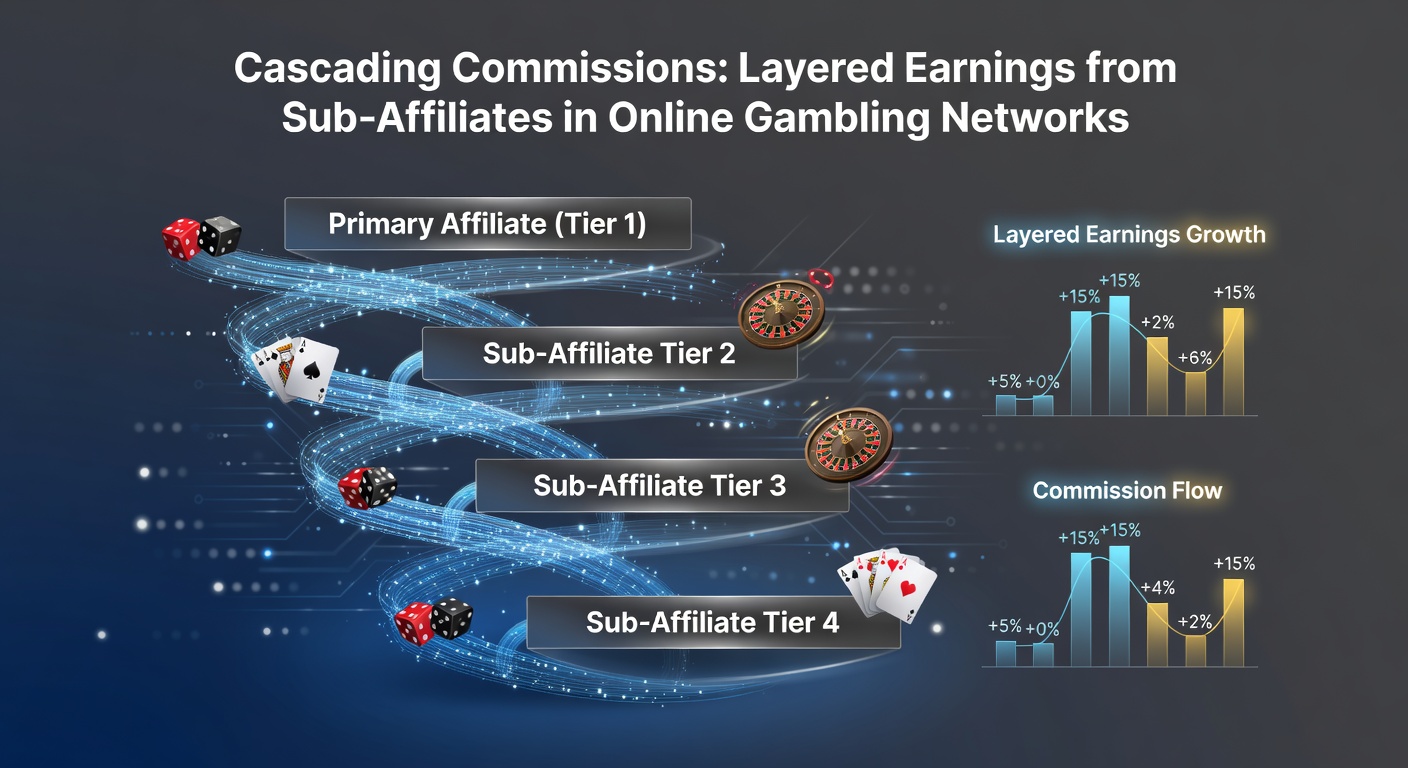
Online gambling networks rely heavily on affiliate programs to drive player acquisition, and cascading commissions add a dynamic layer by allowing affiliates to earn from sub-affiliates they recruit. Experts describe this model as a multi-tier system where primary affiliates receive not only direct commissions from their referrals but also a percentage of earnings generated by second- and third-level recruits, creating exponential revenue potential while operators benefit from viral network expansion. Data from industry trackers shows these structures have proliferated since the early 2010s, with adoption surging as digital marketing costs climb.
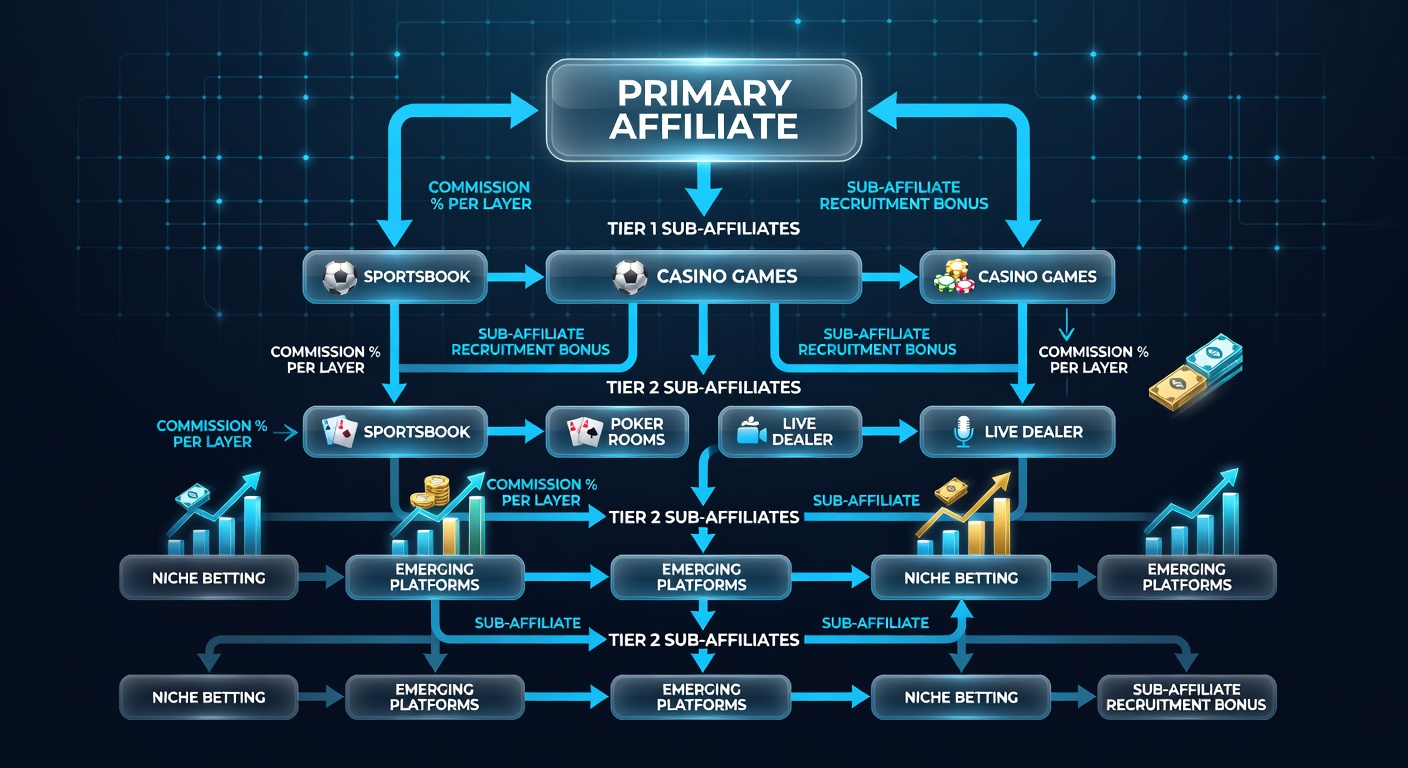
At its core, the primary affiliate signs up with a casino or sportsbook operator, promotes links or banners, and earns revenue share—typically 25-50% of net gaming revenue from referred players—or cost-per-acquisition fees. But here's where it gets interesting: that same affiliate then invites others to join under their umbrella, pocketing overrides like 5-10% from sub-affiliate performance, and those subs can recruit further, triggering additional cascades. Studies from affiliate analytics platforms reveal average networks span three to five tiers, although deeper structures exist in unregulated markets.
Mechanics of Layered Earnings in Practice
Affiliates activate cascading features through dedicated dashboards provided by networks like Income Access or PartnerMatrix, where they generate unique tracking links for subs and monitor real-time performance across layers. Commissions cascade downward because operators calculate payouts based on hierarchical trees; for instance, if a third-tier sub-affiliate brings in £10,000 in revenue, the operator pays 40% (£4,000) to the direct player referrer, 8% (£800) to the second-tier affiliate, and 2% (£200) to the top-level recruiter, with residuals flowing indefinitely as long as players remain active. Figures from a Malta Gaming Authority oversight report indicate such models boost retention, since affiliates nurture their downlines to sustain long-term deposits.
Yet tracking precision matters; cookies or postback pixels ensure attribution even across devices, preventing disputes that plagued early systems. Observers note hybrid models blend revenue share with CPA bonuses for milestones, like recruiting 50 subs, which can multiply earnings fivefold in competitive niches such as slots or live dealer games. And while caps exist in some programs to curb abuse, uncapped cascades remain common, fueling stories of affiliates scaling to six-figure monthly hauls from minimal upfront effort.
- Tier 1 (Primary): 30-50% revenue share from direct referrals, plus 5-15% overrides from subs.
- Tier 2: Inherits reduced shares (20-40%), earns from their own recruits.
- Tier 3+: Diminishing percentages (1-10%), but volume from networks compensates.
Take one network documented in trade analyses: an affiliate recruits 10 subs, each onboarding 20 players generating £5,000 monthly revenue apiece; cascading yields compound to over £50,000 in layered commissions before operator cuts.
Advantages and Challenges Observers Identify
Operators favor cascading systems because they leverage affiliates' networks for organic growth at low cost; research from the Australian Gambling Research Centre highlights how such programs cut acquisition expenses by 30-40% compared to paid ads. Affiliates, meanwhile, discover passive income streams that scale without proportional work, especially in evergreen markets like poker or esports betting where player lifetime value stretches years.
But challenges persist: dilution risks arise when deep tiers erode primary earnings, and fraud detection demands vigilant monitoring since fake sub-signups have tainted reputations. Data indicates 15-20% of programs enforce anti-multi-account rules with IP verification, while others use AI to flag suspicious patterns. What's notable is how successful affiliates mitigate this by focusing on quality over quantity, mentoring subs to ensure sustained player deposits rather than hit-and-run traffic.
Case Studies from Global iGaming Affiliates
One prominent example involves a European affiliate group that launched a sub-recruitment drive in 2022, growing from 50 to over 5,000 members within 18 months; cascading commissions accounted for 60% of their £2.5 million annual payout, per disclosed program stats. Participants built this by hosting webinars and private forums, turning recruits into advocates who funneled high-value traffic from social media and SEO.
Across the Atlantic, North American networks adapted similar models post-2018 PASPA repeal, with affiliates in New Jersey and Pennsylvania layering subs to tap legal sportsbooks; reports show tiered earnings spiked 250% year-over-year as states like Michigan joined. And in Asia-Pacific regions, where mobile-first gambling dominates, apps facilitate instant sub-onboarding, leading to cascades that reward viral sharing in group chats.
These cases underscore a key pattern: top performers treat sub-affiliates like partners, offering split-testing tools and co-branded content, which sustains cascades even amid algorithm changes on platforms like Google or Facebook.
Regulatory Scrutiny and Compliance Across Regions
Regulators worldwide scrutinize cascading models to prevent money laundering and ensure transparent tracking; the Nevada Gaming Control Board, for instance, mandates detailed affiliate disclosures in licensed operations, while EU directives under MIFID II require risk warnings in multi-tier promotions. Compliance tools like KYC for sub-signups have become standard, reducing wash trading where affiliates cycle funds artificially.
In emerging markets, self-regulatory bodies such as the Canadian Gaming Association push for tier limits to protect consumers, although enforcement varies. Data from 2025 audits reveals 85% of compliant networks cap tiers at four, balancing growth with oversight. As April 2026 approaches, industry watchers anticipate tighter rules from bodies like Sweden's Spelinspektionen, potentially standardizing override caps amid rising player protection mandates.
Trends Shaping the Future of Cascading Networks
Innovation accelerates with blockchain for immutable tracking, allowing smart contracts to automate cascades without intermediaries; pilot programs in Curaçao-licensed networks already test this, promising fraud-proof payouts. AI-driven personalization tailors sub-offers, boosting recruitment by 40% according to beta reports, while crypto casinos integrate wallet-based referrals for borderless layers.
Yet saturation looms in mature markets, prompting shifts toward performance-based hybrids where overrides tie to player lifetime value rather than raw volume. Observers track rising adoption in Latin America, where economic pressures drive affiliate hustles, and predict global cascades could channel $10 billion in commissions by 2028, per aggregated forecasts.
So networks evolve, blending gamification—like leaderboards for top recruiters—with ethical guardrails, ensuring layered earnings remain a viable path amid intensifying competition.
Wrapping Up the Cascade
Cascading commissions transform affiliate marketing in online gambling from linear referrals to networked ecosystems, where strategic recruitment unlocks sustained revenue layers for participants at every level. Data confirms their role in efficient player acquisition, regulatory adaptations refine risks, and ongoing tech upgrades promise deeper scalability. Those navigating these structures find that while complexity demands savvy, the potential for compounded earnings keeps networks expanding, shaping iGaming's promotional backbone well into 2026 and beyond.