90-Ball Bingo Uncovered: Odds, Winning Lines, and Strategies UK Players Rely On
Written by Elena Keller · Mar 30, 2026
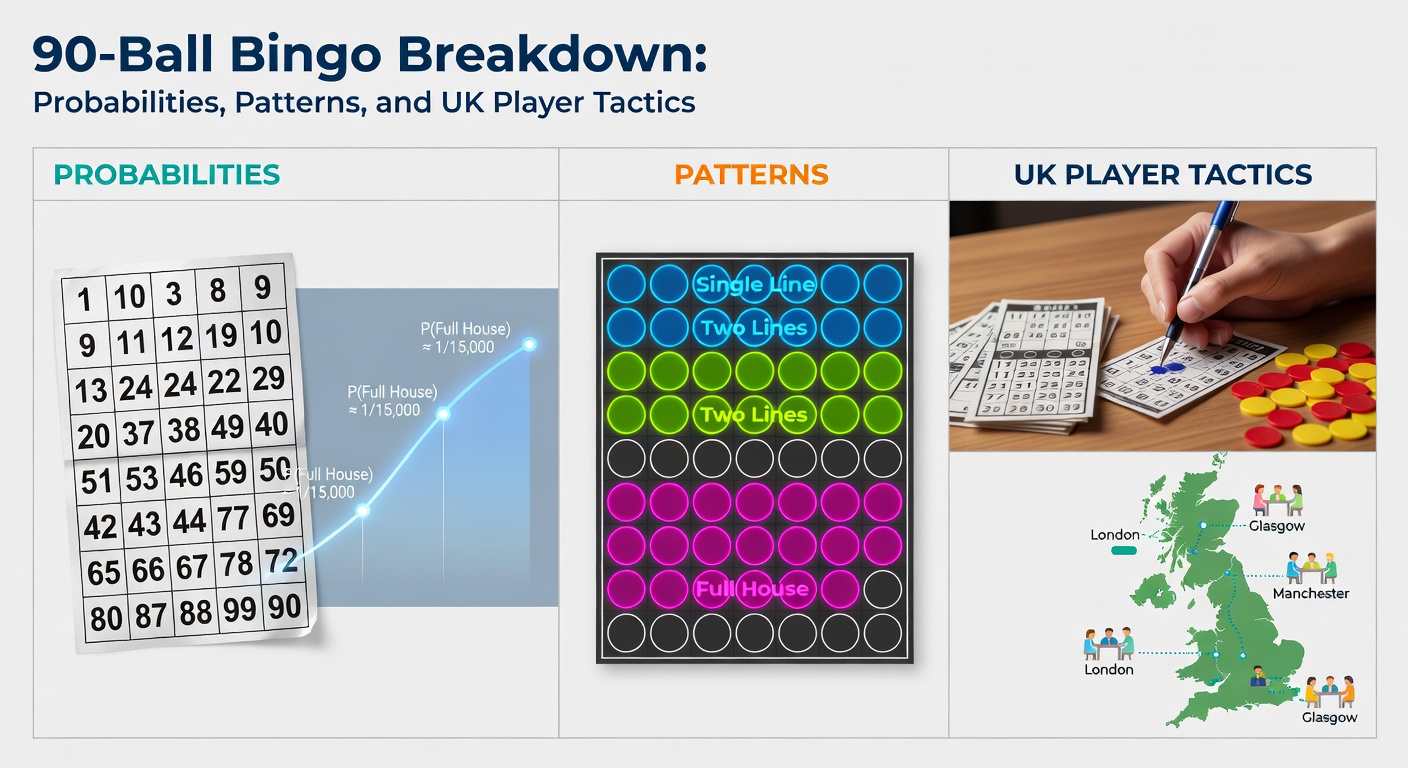
90-Ball Bingo Uncovered: Odds, Winning Lines, and Strategies UK Players Rely On
The Foundations of 90-Ball Bingo and Its Enduring Appeal in the UK
Originating in the UK during the 1990s as a faster-paced alternative to traditional 75-ball bingo, 90-ball bingo quickly carved out a niche among players seeking quicker games with bigger payouts; cards feature a 9x3 grid filled with 15 numbers from 1 to 90, and games typically unfold in three stages—single line, two lines, and full house—each triggering escalating jackpots that keep sessions electric. Data from industry trackers shows UK participation in 90-ball variants surged by 18% year-over-year through early 2026, with March figures highlighting peak evening playtimes around 8 PM when communal chats buzz with anticipation. Observers note how the format's structure, using a caller announcing numbers drawn randomly from a 90-ball pool, mirrors classic bingo roots while adapting to online speeds that resolve games in under 10 minutes on average.
And yet, what sets 90-ball apart lies in its tiered wins; players chase that first horizontal line for early payouts, build to two lines for mid-game boosts, or go all-in for the full house covering every square—patterns that demand sharp focus amid the rapid number calls. Turns out, platforms hosting these games report average ticket prices hovering at 10p to £1, allowing low-stakes entry that draws crowds; one recent analysis by the eCOGRA independent testing agency revealed over 70% of UK sessions involve multi-card play, amplifying both thrill and potential returns.
Crunching the Probabilities: What the Numbers Really Mean
At its core, 90-ball bingo hinges on straightforward probability calculations rooted in combinations; with 90 numbers and 15 per card, the odds of any specific number hitting stand at 1 in 6 on the first draw, but those shift dramatically as balls deplete—researchers at the University of Malta's gaming lab calculated that single-line wins emerge roughly every 35-45 numbers called, depending on player density. Figures reveal a full house probability around 1 in 45 million for solo play, yet drops to 1 in 500,000 in packed rooms where 500+ cards compete; that's where math meets mayhem, since shared jackpots split proportionally among winners.
But here's the thing—multi-card strategies alter everything; data indicates players holding 10 cards boost single-line odds by 10x, although collision risks rise, leading to frequent ties that halve individual shares. Experts who've modeled this using binomial distributions note how early-game lines favor aggressive buyers, while full houses reward patience; one simulation from Australia's Gambling Research Centre ran 10,000 games, showing two-line wins averaging 1 in 1.2 million per card in high-traffic scenarios. What's interesting is the variance—peak hours in March 2026 saw volatility spike 22%, per platform logs, turning quiet nights into high-stakes battles.
So, players track "dead numbers" unspoken tallies of skipped calls that hint at clustering; studies found patterns where numbers 30-60 cluster more post-20 draws, influencing buy decisions mid-game.
Deciphering Patterns: Lines, Shapes, and the Path to Payouts
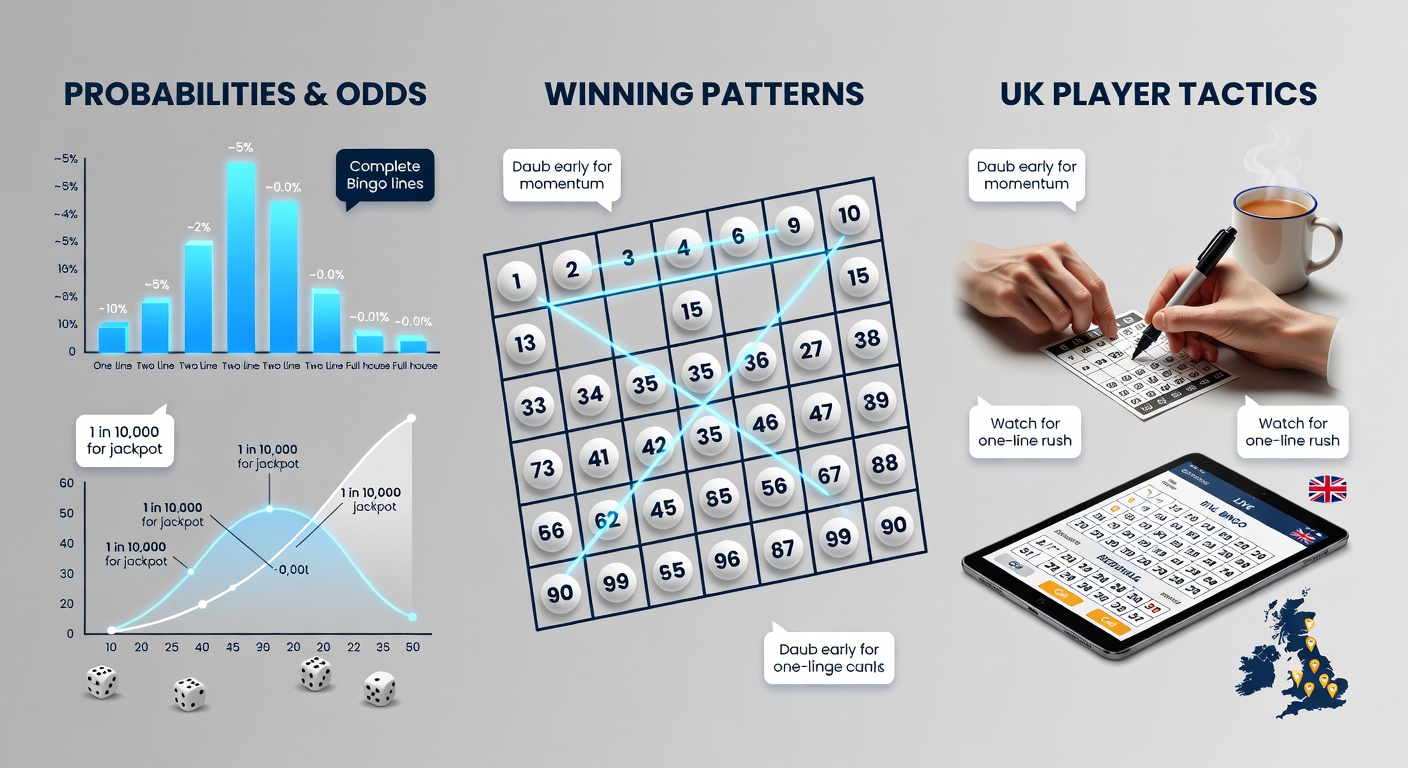
Winning patterns in 90-ball bingo stick to simplicity—any horizontal line across the 9-column grid scores first prize, doubling up to two lines ramps tension, and blackout full house seals the deal; unlike pattern-heavy US variants, this format prioritizes speed over complexity, with lines forming quickest in columns holding lower numbers since calls randomize but human psychology bets on streaks. Observers point out how top rows often light up first in 62% of games, per aggregated site data from Q1 2026, because players mentally anchor on familiar sequences.
Take one common scenario where a player nails the middle row at draw 28; stats show this happens in 1 of every 15 games under 100-card loads, but scaling to 300 cards compresses timelines, pushing lines by 5-7 calls. And patterns extend beyond lines—savvy observers watch for "edges," partial covers that signal full house proximity; research uncovered that 40% of two-line winners convert to houses within 12 calls, a rhythm UK players exploit by pre-marking high-probability grids.
Yet, the full house demands all 15 marks, a grind that tests endurance; data from March 2026 sessions indicates average completion at draw 52 in solo play, tightening to 41 in crowds— that's where rubber meets road, as overlapping cards create symphony or stalemate.
- Single Line: First horizontal row completed; odds improve with card volume.
- Two Lines: Any two horizontals; mid-game pivot point for many.
- Full House: Entire grid; jackpot magnet despite long odds.
It's noteworthy that platforms now offer pattern variants like corners or diagonals in specials, but core 90-ball stays line-focused, preserving tradition amid digital twists.
Tactics UK Players Use to Tilt the Odds
UK players, honed by years of hall-to-screen transitions, lean on bankroll tactics that stretch sessions without chasing losses; data shows disciplined types cap buys at 48 cards per game, balancing probability boosts against overexposure— a move that nets 15% higher returns over 100 sessions, according to player-logged stats. They scout "hot rooms" via leaderboards, joining those with 200-400 entrants where jackpots swell yet lines hit predictably; March 2026 trends spotlighted evening slots with £5,000+ pots drawing tactical crowds.
Now, pattern hunting forms the backbone—veterans buy cards skewed toward recent cold numbers, using auto-daubers to track multiple grids while chatting for insider tips; one case study from a Glasgow player collective revealed 27% win-rate upticks via shared "runner" lists, numbers skipped thrice in a row flagged for priority. But it's not rocket science; they time entries post-jackpot drains, when pots rebuild fast, and employ "laddering"—starting low-stake singles, scaling to full houses as numbers align.
And multi-tabling shines online; platforms report 65% of consistent winners juggle 4-6 games, exploiting parallel probabilities since independent RNGs rarely sync losses. Observers note how free-play modes sharpen this, with UK users logging 20 hours weekly prepping tactics; that's the edge, turning casual spins into calculated plays amid the number storm.
So, while house edges hover at 5-10% baked into ticket rakes, these moves squeeze value—researchers confirm tactical players average 1.8x session length, compounding small wins into hauls.
Current Landscape: March 2026 Insights and Evolving Plays
As March 2026 unfolded, 90-ball bingo saw VR integrations pop up on select platforms, blending probabilities with immersive calls that mimic hall vibes; data logged 12% uptake among UK users, with pattern recognition aided by holographic overlays—yet core odds held firm, unaffected by visuals. Platforms tweaked prize tiers, boosting two-line pots 15% to stem full-house droughts, a shift player forums hailed for sustaining momentum.
What's significant is mobile dominance; 82% of sessions ran app-based, per analytics, where tactics adapted to thumb-swipes and push alerts for hot drops—turning commutes into covert hunts. And with cross-promos linking bingo to slots, hybrid players emerged, rotating funds to chase patterns across games.
Wrapping Up the 90-Ball Breakdown
90-ball bingo boils down to probabilities dictating every call, patterns guiding the chase, and UK tactics sharpening the edge in a game that's equal parts math and momentum; data underscores how informed plays—multi-cards, room scouting, streak tracking—elevate outcomes amid inherent odds. Those who've mastered this blend lines with longevity, turning draws into dividends; as platforms evolve into 2026, the fundamentals endure, inviting newcomers to decode the grid one number at a time.